
posted by on July 3, 2026
Yesterday, I got to see some puffins in person for the first time ever!
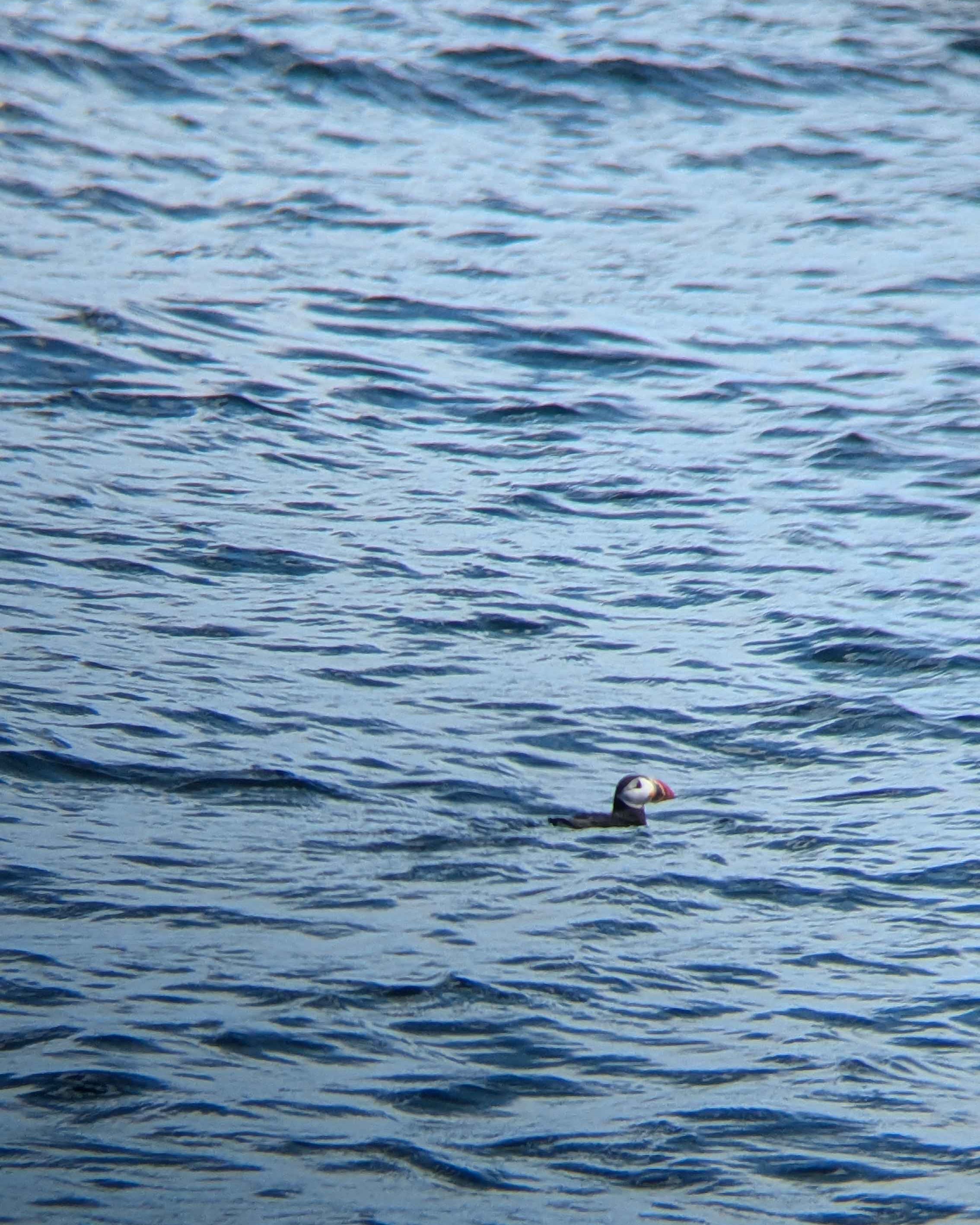
Eastern Egg Rock Island is a 7-acre rock that sticks up to 20ft out above sea level, and it has been designated a protected habitat for puffins since 1973, thanks to the National Audoban’s Project Puffin. It is the furthest point south where Atlantic Puffins breed in North America.
Visiting Port Clyde that morning for breakfast, we went to the herring gut coastal science center to see the brand new touch tank that had been installed. They had a room with several tanks for horseshoe crabs, sea urchins, a flounder, a jackknife clam, and a calico lobster1. It was maybe the most lethal touch tank area I’ve ever seen2. We spoke with the head of the center, Sally, who mentioned that she had heard a rumor that there might already be puffins this year on Eastern Egg Rock Island. Normally, “they don’t arrive until July,” but it just-barely being July and having heard such a promising rumor, we had to check it out.
The mouth of the St. George river has hundreds, maybe thousands, of lobster traps in it that are checked regularly by amateur lobstermen. We spent much of our voyage navigating the sailboat between the buoys of these traps3, which ranged from bright neon colors bobbing above the surface to completely-indistinguishable-from-sea-water colors bobbing just below the surface. While keeping our eyes peeled for the second category of buoy, we spotted a couple seals and a few porpoises along the way.
We read from Sibley’s Field Guide to Birds of North America to prepare for any upcoming sightings. Puffins are in a family of birds called auks. In this same family are Guillemots and Razorbills, which both happened to also exist in this part of Maine and even around this particular island. All three are roughly the same size of black and white birds, with the bills and feet being the main differentiators.
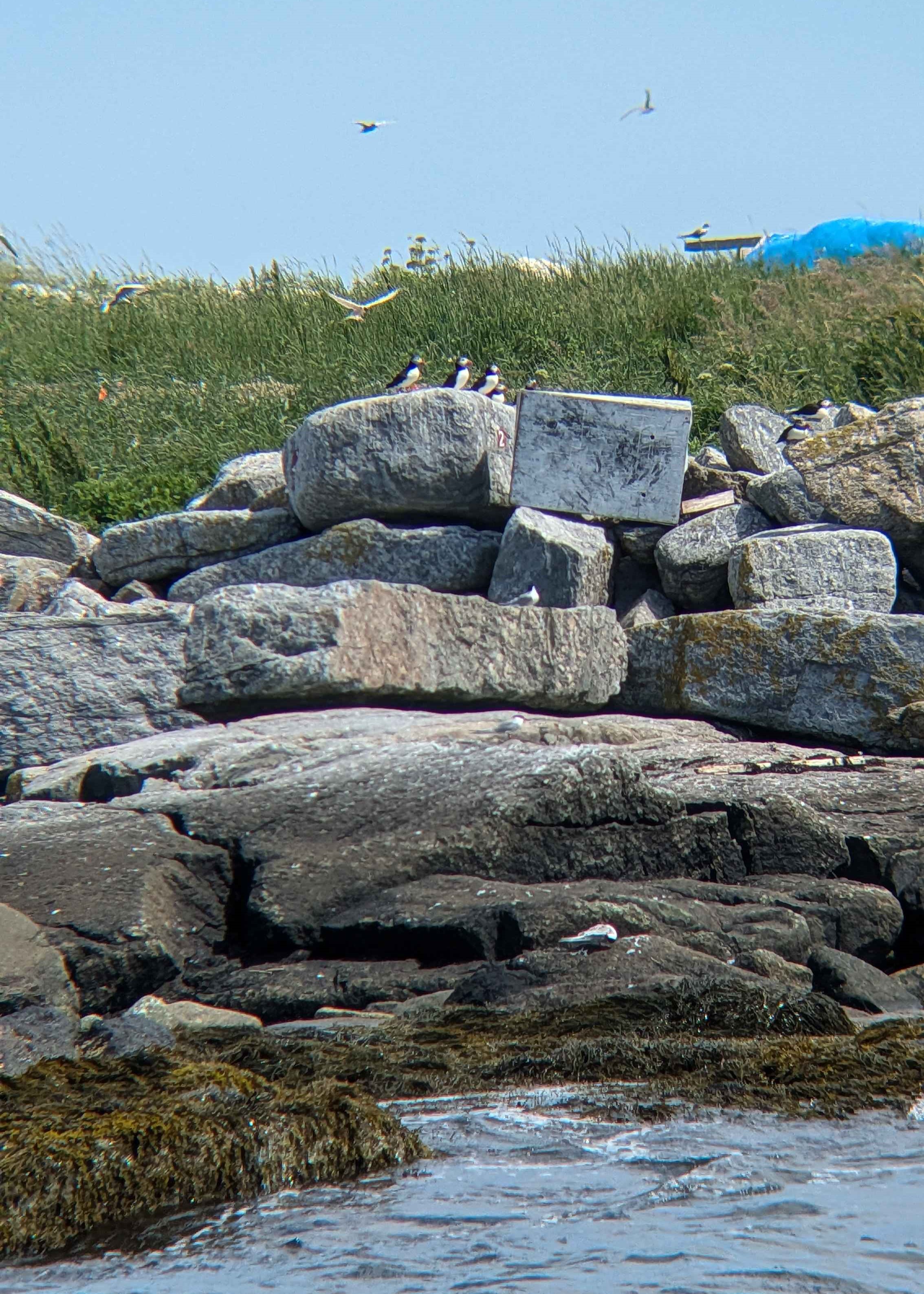
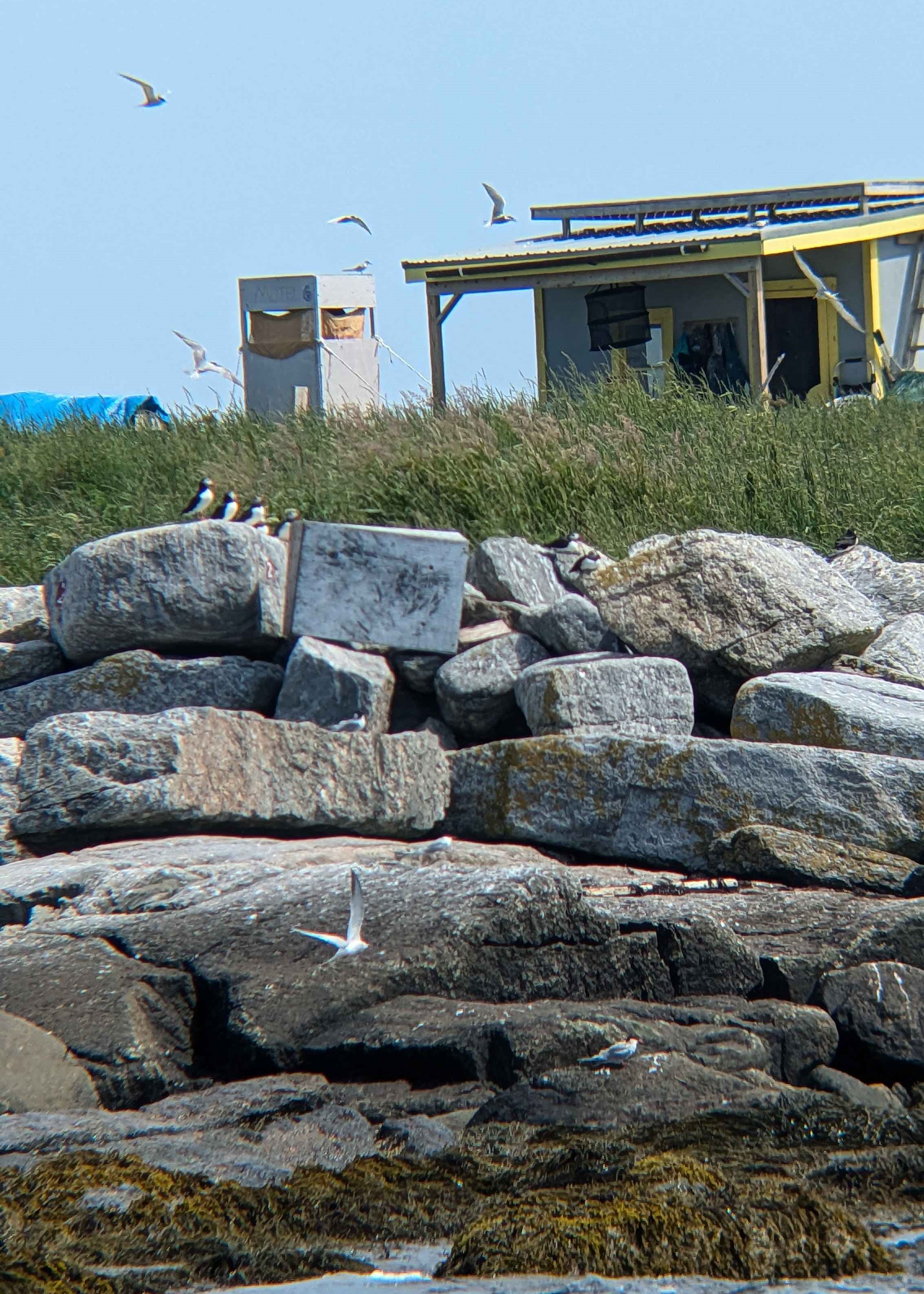
About a mile away from Eastern Egg Rock Island, we could see flocks of seabirds flying over the island, and a large ferry-boat that looked promising: a ferry-boat full of tourists doesn’t go to “the island where the puffins might be” unless there’s something interesting to see. During the approach, we passed the binoculars around to see if anyone could spot a puffin. We had some close calls, some “I’m not sure, but maybe”s, and then eventually we all became sure at once that there were puffins and that we were seeing them.
While circling the island a few hundred feet away, I took the binoculars and lined them up with my phone camera to take some shoddy telescopic lens pictures. For being on a boat that was rocking around from waves, holding a phone in one hand and binoculars in the other, the fact that I was able to get any non-blurry photos of anything is kind of wild.
By our third or fourth lap of the island, it was clear that there were plenty of puffins on rocks, in the water, and soaring around. We had times where they were flying directly toward our boat or only a dozen feet off the bow in the water. The constant thrum of squawks of the other seabirds around the island kept us from being able to hear any puffin-specific sounds, but the sight alone was well worth it.
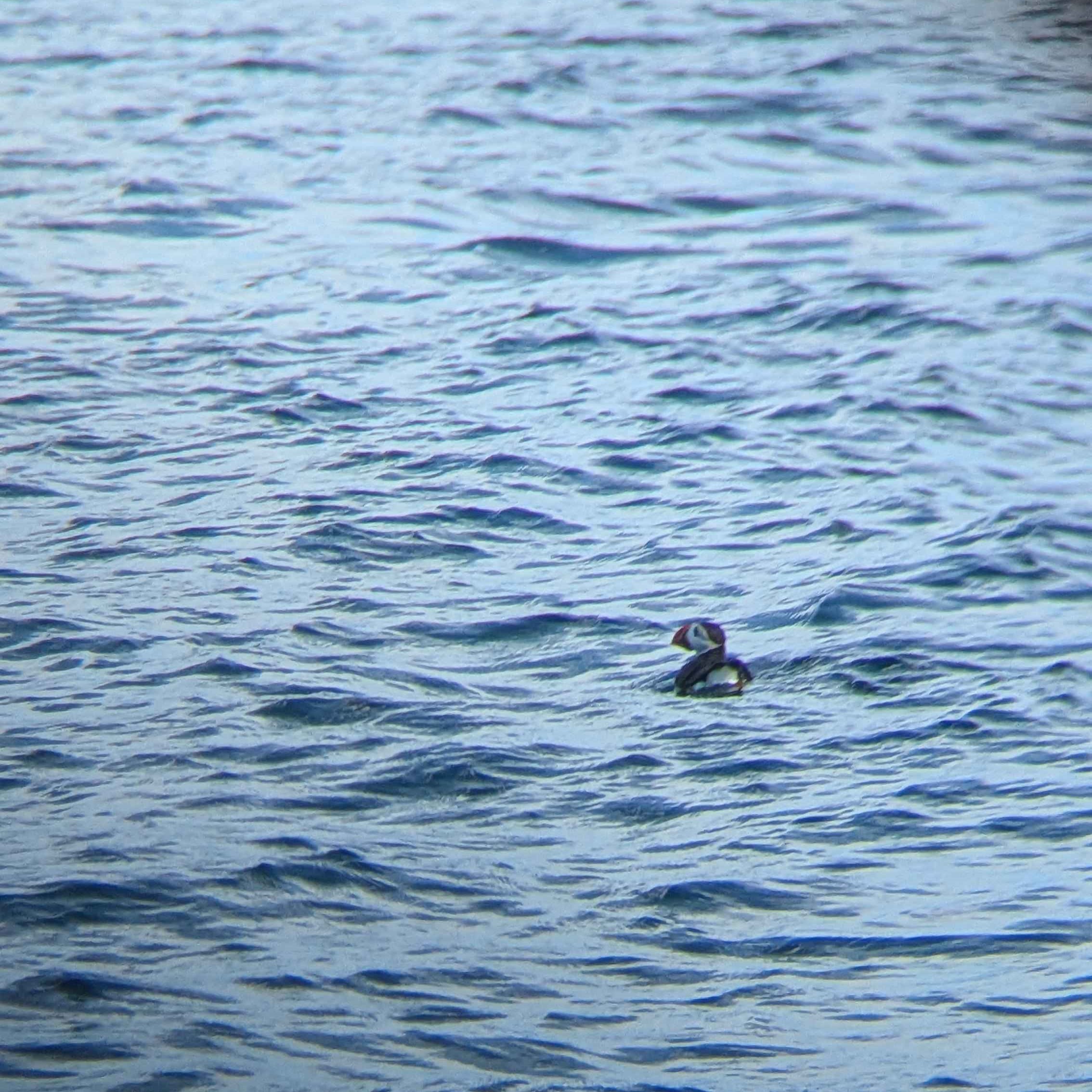
This trip to Maine had not been planned around puffin-sighting, but I’m so grateful to have gotten the opportunity.
Footnotes
-
Even rarer than a “blue lobster”, which they also had a specimen of at the center’s touch tank, the calico lobster is anywhere from a 1-in-30-million to 1-in-50-million occurrence depending on who you ask. Either way, that’s even rarer than seeing a puffin. It was a big day for seeing creatures! ↩
-
It makes sense in hindsight that the creatures in a touch tank need to be fed and may not all be vegetarian, but when we arrived to learn the lobster had killed a clam that had just been placed in there a minute prior, it was surprising! Similarly, a starfish needed to be separated from a crab that was looking at it feistily. Thankfully, we were all adults who understood the circle of life just fine. ↩
-
Because of the specifics of the wind direction, we were motoring the sailboat, which meant that running over any lobster trap would very likely get the thick rope and/or metal chain connecting the trap to the buoy to wrap around the propeller and necessarily cause a bad time for everything involved. Some traps are one-buoy-to-one-cage, while others are 10-cages-along-a-chain-connecting-two-buoys. The former is easier to dodge and lower stakes in the worst case. ↩